Description
The Print
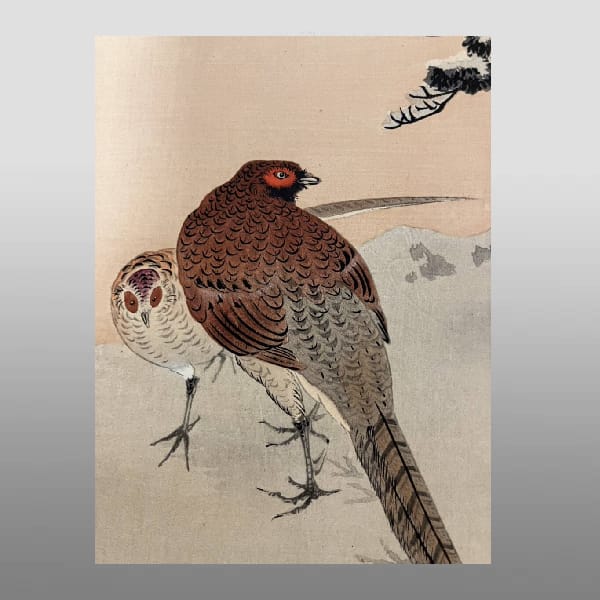
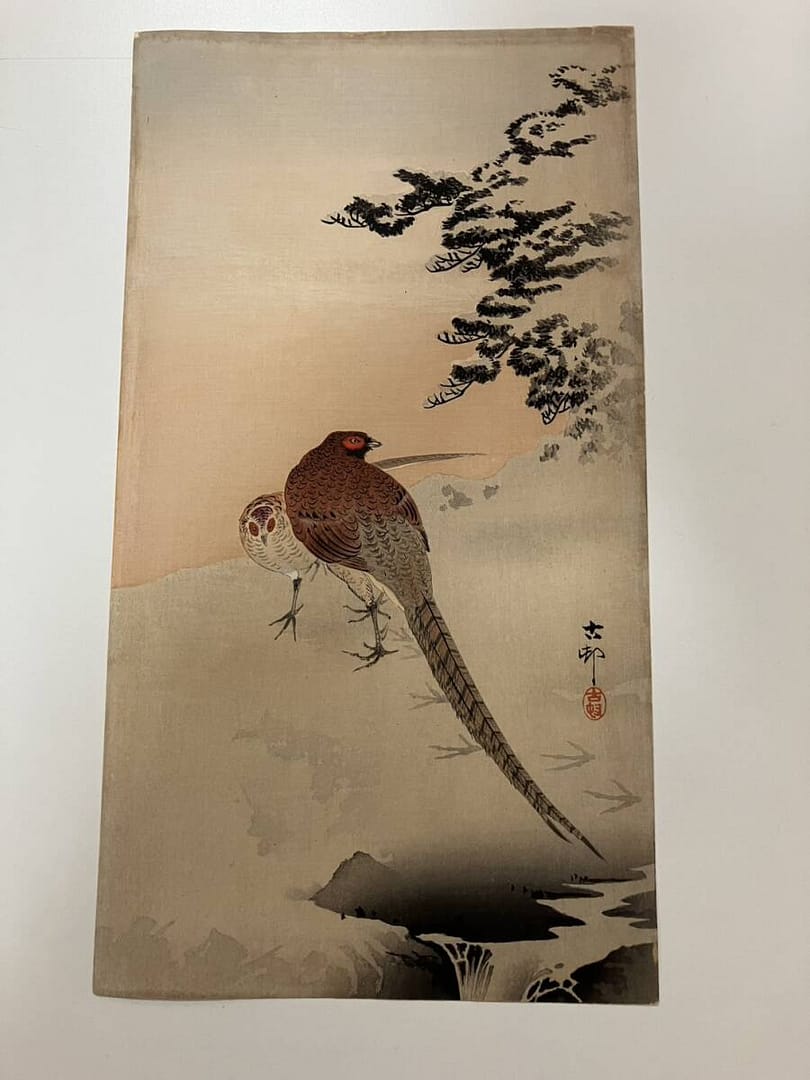
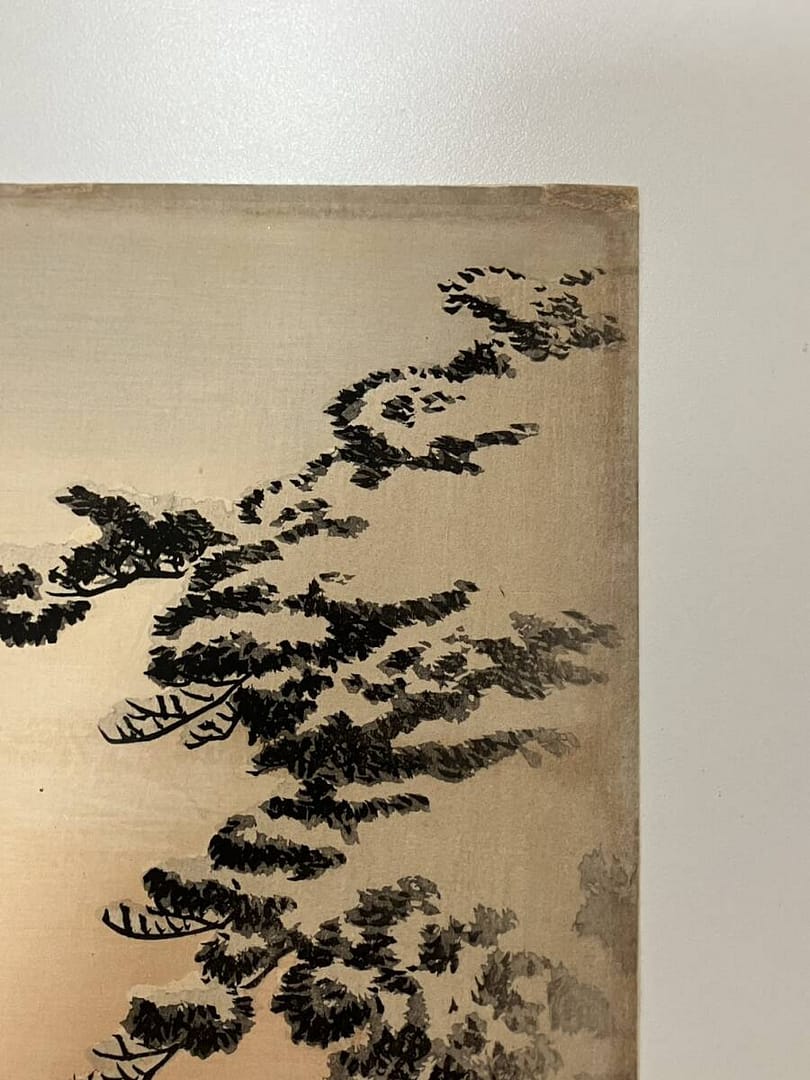
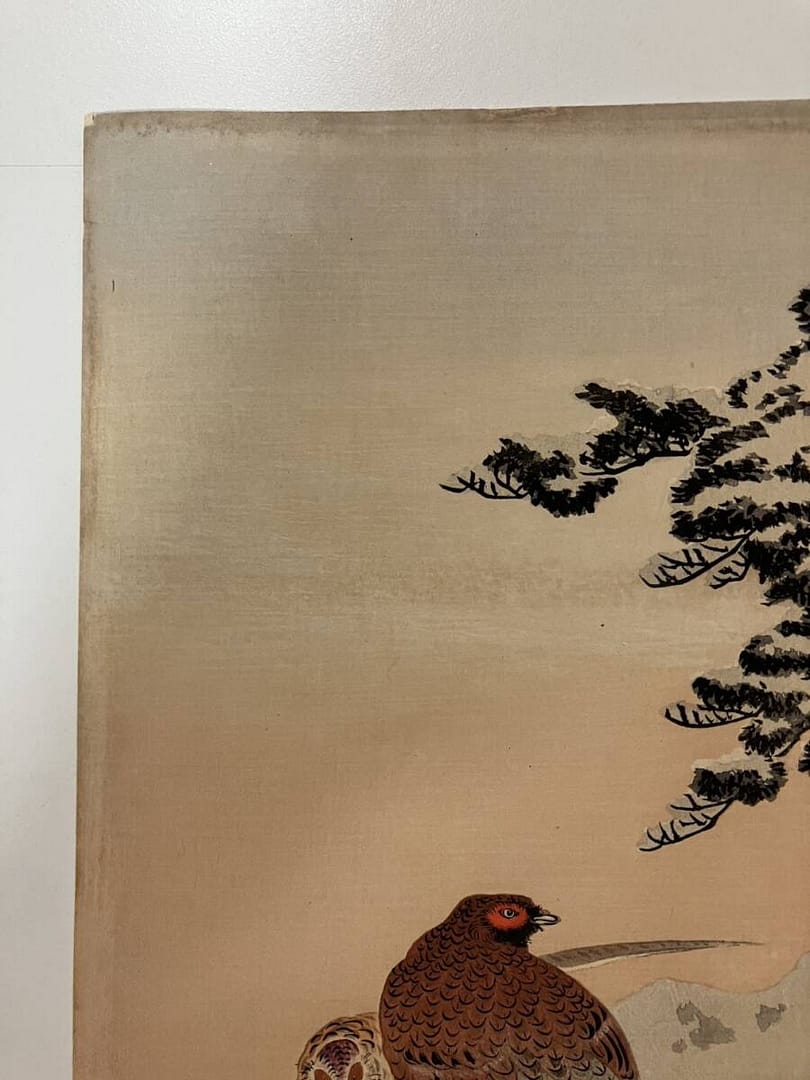
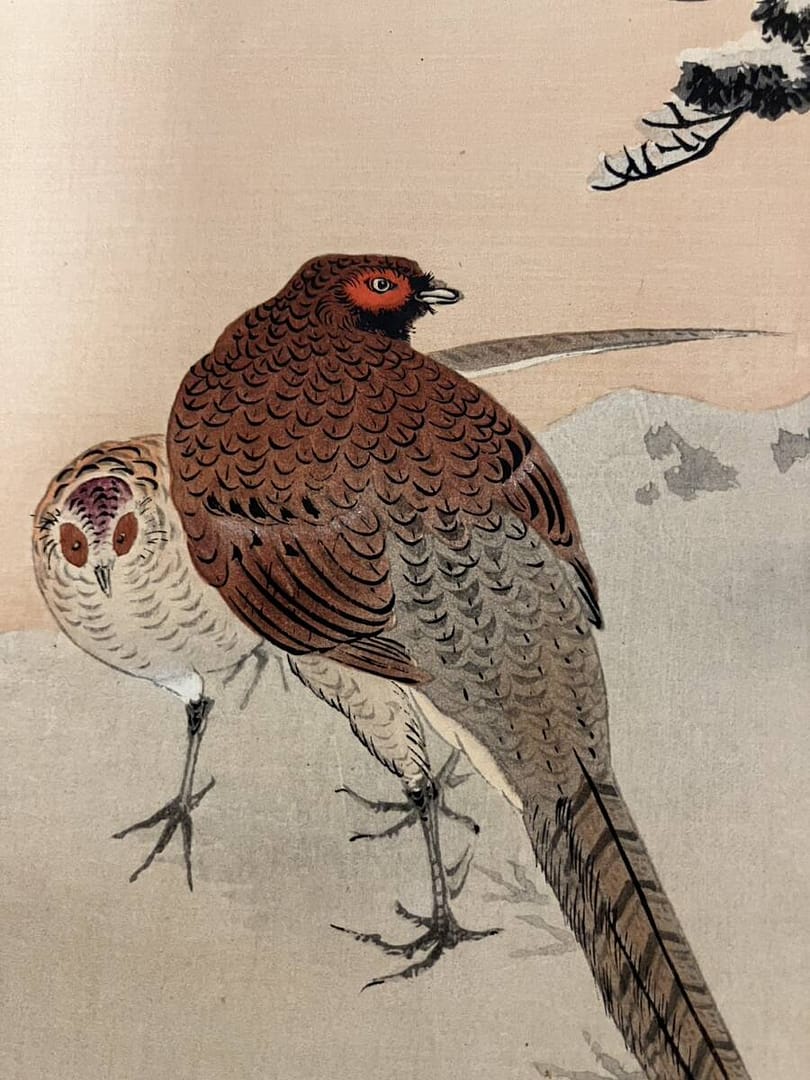
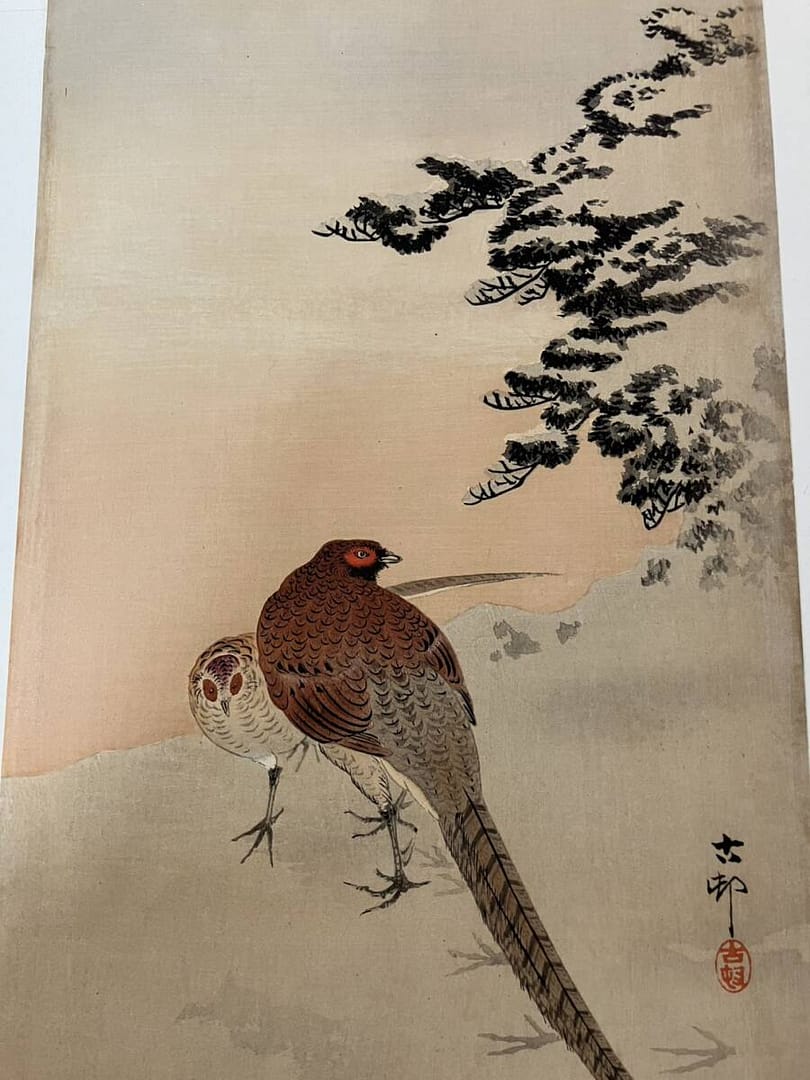
A pair of Japanese copper pheasants (yamadori) sit together on a pine branch heavy with fresh snow. The male bird, rendered in rich chestnut-brown tones with a vivid red eye, dominates the lower portion of the composition. His mate perches slightly above and behind, her plumage more subdued. Dark pine needles frame the scene from above, their weight bending the branches downward under the snow.
The composition is quintessential Koson: a vertical format that draws the eye upward through the natural geometry of the branch, from the warm weight of the birds into the cold stillness of the snow-covered canopy. The printing demonstrates the characteristic precision of shin-hanga woodblock technique, with careful gradation (bokashi) in the background and crisp delineation of individual feathers.
The Artist
Ohara Koson (1877–1945) is widely regarded as the foremost bird-and-flower print artist of the twentieth century. Working within the shin-hanga (“new prints”) movement, he collaborated with master carvers and printers to produce over 500 designs depicting birds, animals, and botanical subjects. His prints were exported extensively to Europe and America during his lifetime, and his reputation has only grown since. The landmark 2018 retrospective at the Rijksmuseum in Amsterdam brought renewed international attention to his work and significantly expanded the collector base.
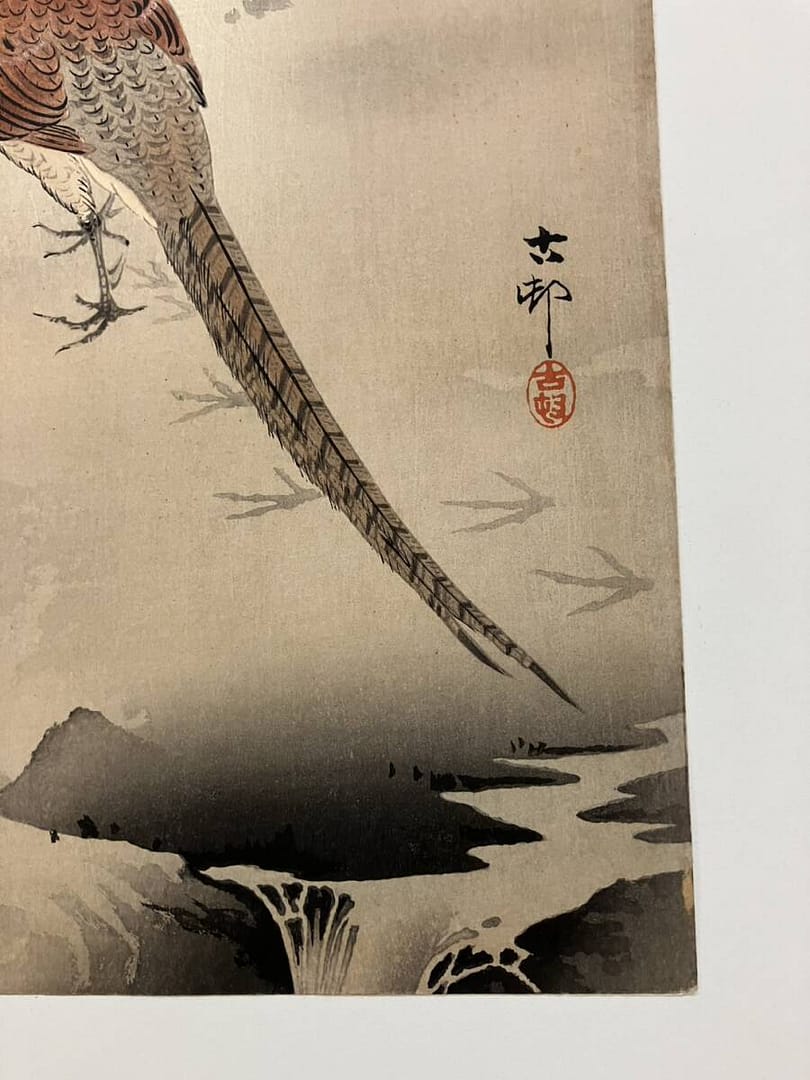
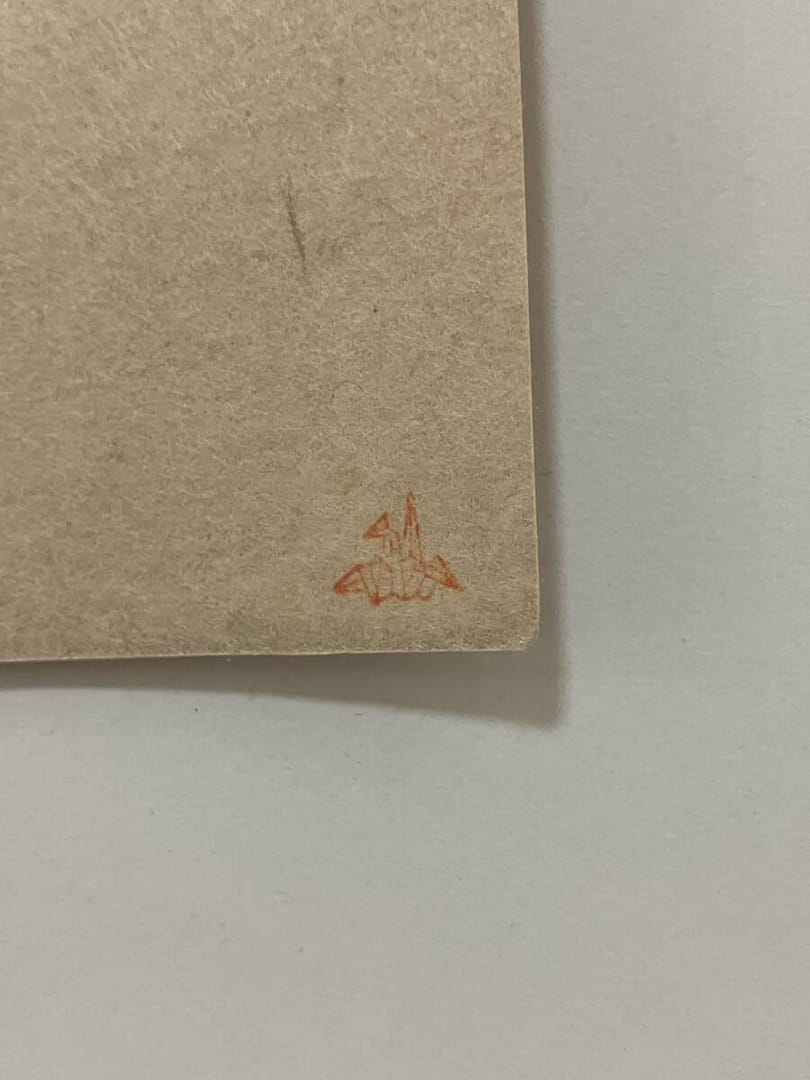
Koson published under three names over the course of his career — Koson (古邨), Shōson (祥邨), and Hōson (豊邨) — each corresponding to a different period of activity. This print bears the Koson seal, placing it within his most prolific and widely collected period.
Condition
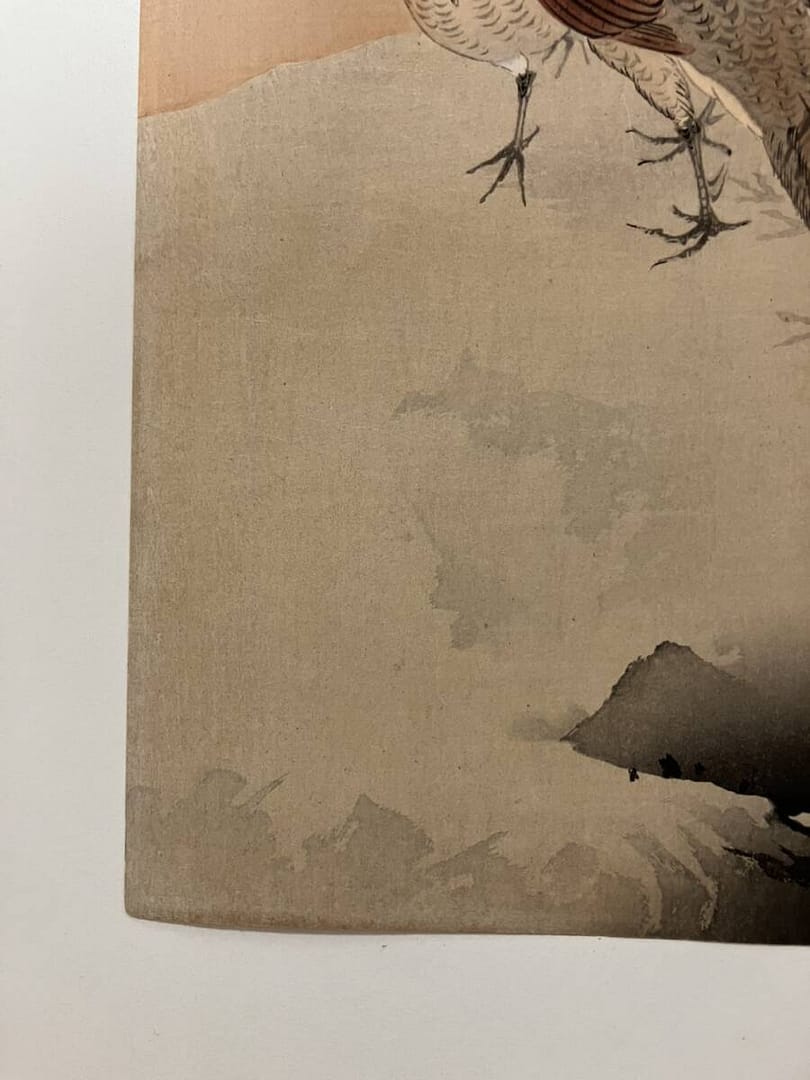
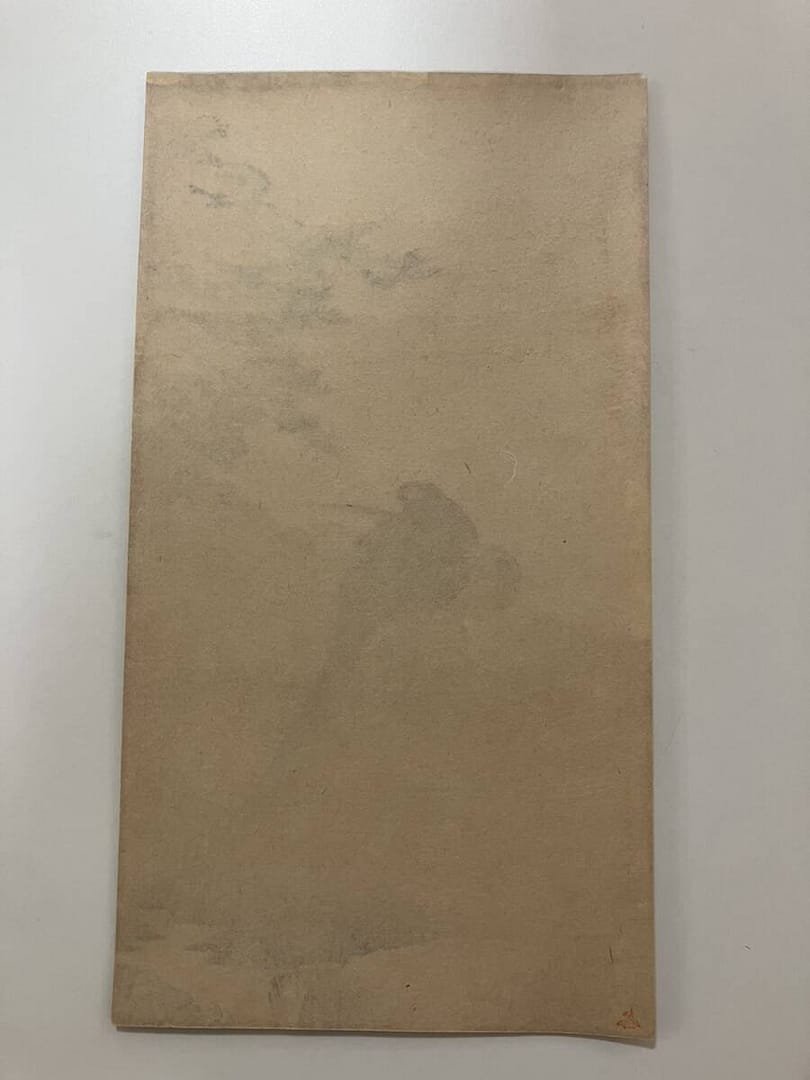
This is an original print, approximately 100 years old. It shows age-appropriate toning to the paper and minor surface wear. The colours remain well-preserved with good contrast between the dark pine, warm plumage, and white snow. Edges are intact. There are no tears, holes, or significant losses. A full condition report with measurements will be provided upon request.
Condition is rated as fair to good — entirely suitable for framing and display, and representative of how the vast majority of surviving Koson prints from this period present.
Authenticity
This print is sold as a genuine original woodblock print by Ohara Koson. It was sourced through a specialist Japanese auction house and bears the artist’s seal. It is not a reproduction, restrike, or modern facsimile.
About Shin-Hanga
Shin-hanga (“new prints”) was a Japanese art movement of the early twentieth century that revitalised the traditional ukiyo-e collaborative production model — artist, carver, printer, publisher — while incorporating Western techniques of light, shadow, and perspective. The movement produced some of the most widely admired Japanese prints of the modern era, with artists like Kawase Hasui, Yoshida Hiroshi, and Ohara Koson now commanding strong prices at international auction.
Framing & Display
This print is sold unframed. We recommend conservation-quality framing with UV-protective glass and acid-free matting. Japanese prints are traditionally displayed with generous margins; a neutral white or off-white mat with a simple wood frame in black, dark walnut, or natural oak complements the composition well.